

Building a cybersecurity company requires more than identifying a technical vulnerability. Founders must understand how organizations operate, where security teams struggle, and how to develop products that fit into the way people work. That challenge is becoming more complex as AI tools enable employees to create applications, agents, and automations beyond traditional software development teams.
The changing enterprise environment has opened the door for a new generation of security companies. TechCrunch first reported on Pluto Security‘s emergence from stealth, as the company announced $42 million in total funding and outlined its approach to securing the AI workspace.
Led by CEO and co-founder Shahar Bahat, Pluto reports multi-million-dollar annual recurring revenue, more than 1 million endpoints secured globally, and more than 40 enterprise customers, including Oscar Health, Workato, Sixt, AlphaSense, and Fortune 500 organizations.
Building Around How People Actually Work
Pluto’s founding philosophy centers on understanding employee activity rather than relying exclusively on blocking new tools. Bahat said traditional security approaches can become difficult to maintain when businesses adopt technology faster than security teams can evaluate it.
“Security has traditionally been built around stopping things, but that model breaks down when the business is moving faster than security can evaluate every new tool,” Bahat said.
The company aims to give security professionals the context they need to support legitimate activity while applying controls when necessary. Its platform provides visibility, contextual risk assessment, and real-time control across AI tools, their supply chains, and the applications, agents, and automations employees create.
That scope reflects how AI is changing enterprise work. Tools such as Claude Code, Codex, Cowork, Lovable, and Base44 allow employees to build applications and automate workflows without traditional development teams. The resulting AI supply chain can include skills, extensions, packages, MCPs, models, and other dependencies.
Pluto says employees across its customer base use hundreds of supply chain components while building thousands of applications.
A Platform Built for the Expanding AI Workspace
Pluto combines endpoint visibility, contextual analysis, and real-time enforcement. Its capabilities include blocking malicious skills, restricting unsafe agent actions, and preventing access to sensitive data or credentials without stopping legitimate work.
The goal is to provide enterprises with a clearer understanding of activity across the AI workspace. Rather than evaluating tools in isolation, security teams can use the platform to assess activity in context and apply controls to specific risks.
The company also invests in security research and practitioner resources. Its Plutonium hub, powered by proprietary RisksDB, helps security professionals assess risks across AI supply chain components such as skills and extensions.
Pluto says thousands of security professionals are already using and contributing to Plutonium. The resource is available for free and forms part of the company’s community-driven go-to-market strategy.
The Team Behind Pluto
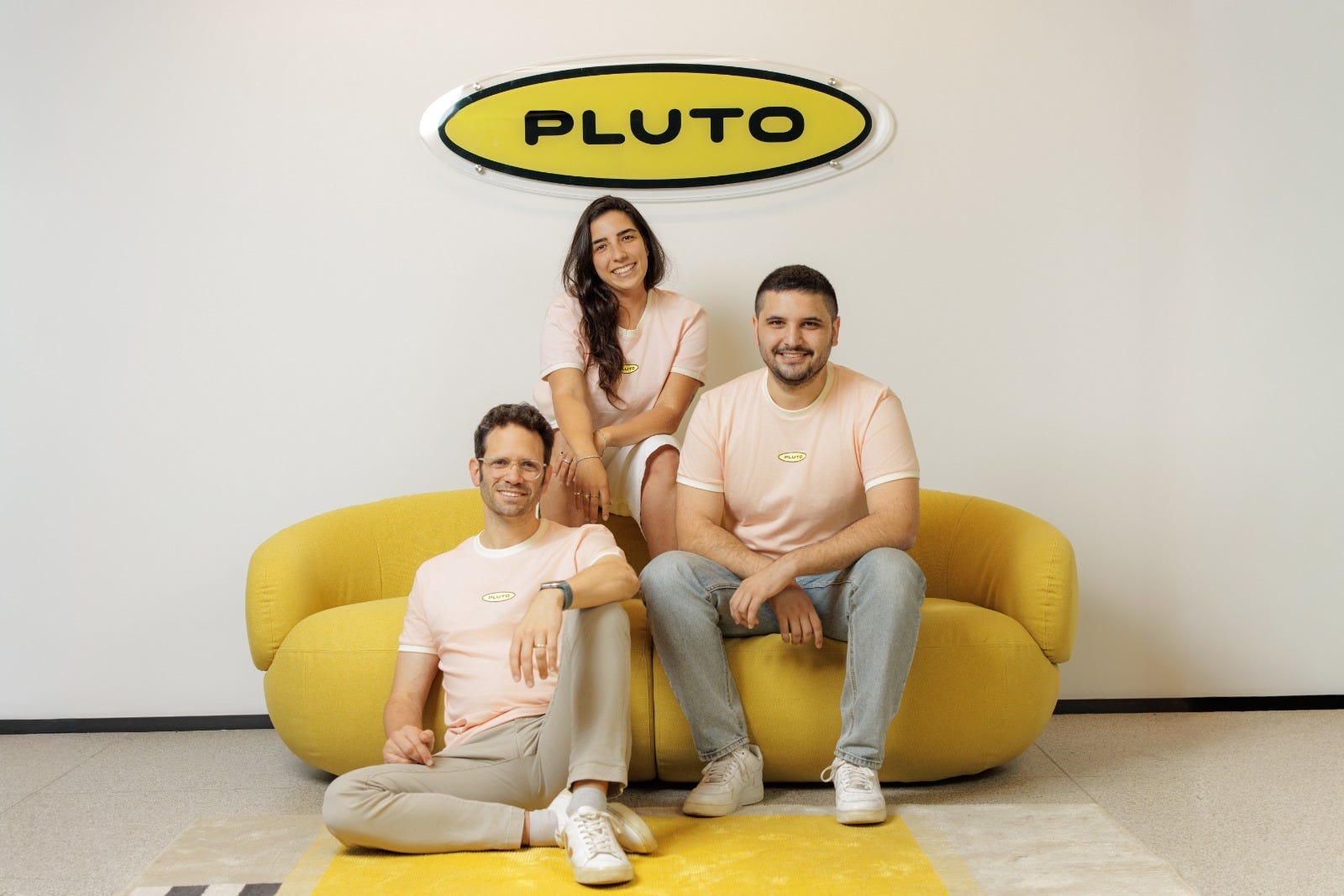
Bahat founded Pluto with Tal Ofer Regev and Gil Maman. Their backgrounds span Microsoft, Palo Alto Networks, Bridgecrew, and Israel’s Unit 8200.
Bahat previously held senior cybersecurity leadership roles at Microsoft and Palo Alto Networks and is a Forbes 30 Under 30 honoree. Regev previously served as vice president of research and development at Palo Alto Networks, where he managed more than 150 people. Maman spent more than six years in Israeli Military Intelligence in technical leadership roles spanning advanced cyber research and security engineering.
The company has grown to more than 50 employees across the United States and Israel. Its investor group includes Jump Capital, TLV Partners, Skinos, AlphaDrive Ventures, Ansa Capital, MTF, and individual investors with backgrounds in technology and cybersecurity.
Why Investors Are Backing the Approach
Pluto’s latest financing is an approximately $34 million round led by Jump Capital. Its seed round was led by TLV Partners, with participation from additional investors, bringing total funding to $42 million.
Saaya Pal, partner at Jump Capital, pointed to the company’s research and distribution strategy when explaining the investment.
“Pluto has built a fundamentally different GTM engine for cybersecurity,” Pal said. “The clearest example is Plutonium, their AI risk database — there was no good public data on what AI tools are actually doing inside enterprises, so the team built it and gave part of it away.”
Pal said hundreds of practitioners use Plutonium every week and that most of Pluto’s pipeline now comes inbound. She also emphasized that building distribution early is important because it becomes harder to retrofit later.
The company says it reached multi-million-dollar ARR in less than a year. Its customers include Oscar Health, Workato, Sixt, AlphaSense, and Fortune 500 organizations.
Scaling With AI Adoption
Pluto plans to use the new capital to continue investing in its product, research, and U.S. expansion as the AI supply chain evolves.
Rona Segev, co-founder and managing partner at TLV Partners, said the company’s approach gives security teams a way to understand what is happening and act with precision rather than simply block innovation.
Pluto’s next phase will test how effectively it can extend its platform as enterprises adopt more AI tools and employees build more applications, agents, and automations. Its strategy combines contextual security controls with research and practitioner engagement, reflecting the company’s view that enabling AI safely requires understanding both the technology and the people using it.