

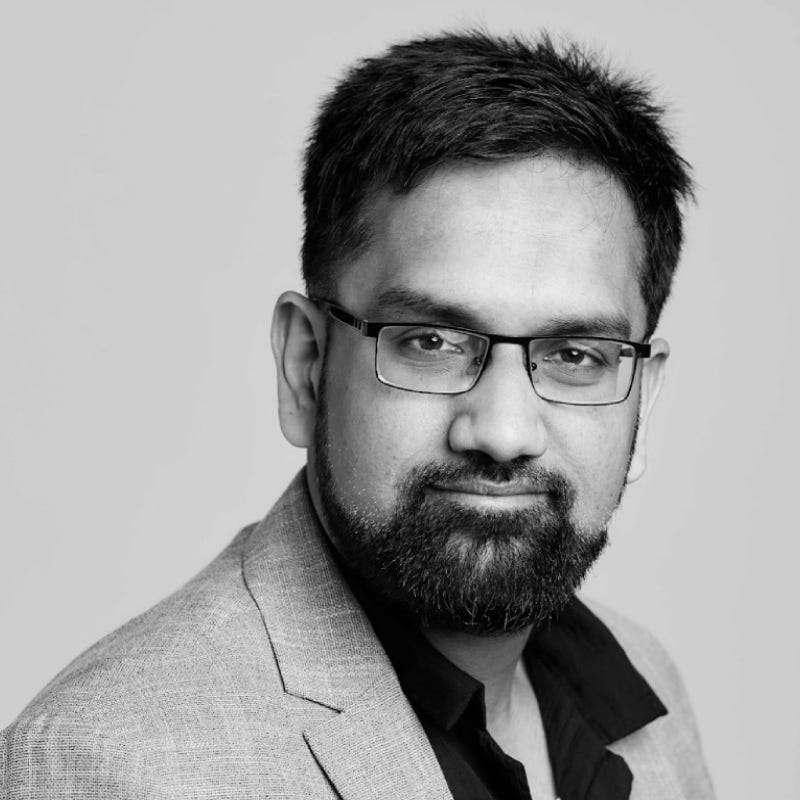
Dr. Adeel Shaikh Muhammad is a cybersecurity leader, author, researcher, and international speaker specializing in AI-driven security operations, cyber risk, governance, and enterprise security strategy. He has advised organizations across the GCC and beyond on SOC transformation, AI governance, security architecture, compliance, and cyber resilience. He is the author of AI-Driven Transformation of the SOC and SecOps and frequently speaks on the intersection of cybersecurity, AI, governance, and leadership.
1. Complete this sentence: “Before you buy any new security tool, first...”
Before you buy any new security tool, first define the exact risk, business outcome, and operating owner it is meant to support. A tool without ownership becomes shelfware very quickly.
2. What’s one rule you enforce on your team that other teams would find strict?
No critical security decision should be based only on a dashboard or vendor score. I expect the team to validate context, business impact, and real exploitability before escalating or closing a risk.
3. What’s a number or ratio that guides how you allocate budget, headcount, or your own time?
I like to balance security investment across three areas: prevention, detection, and response. If most of the budget is going only into prevention tools, the program usually becomes blind during real incidents.
4. What’s one line that works when asking the board or CFO for a budget?
“This is not a technology expense; it is a risk reduction investment tied to business continuity, regulatory exposure, and customer trust.”
5. What should a CISO cut from their program tomorrow with zero regret?
Any report, meeting, or tool that does not change a decision, reduce a risk, or improve response capability. Security teams are often overloaded by activity that looks productive but does not improve resilience.
6. What’s your 60-second test for whether a vendor pitch is worth your time?
I ask: “What specific risk do you reduce, how do you prove it, and what will my team need to operate it after purchase?” If the answer is only buzzwords, it is not worth the time.
7. What’s one meeting, report, or process you eliminated, and what replaced it?
I have replaced long status meetings with risk-based decision updates. Instead of discussing every open item, the focus becomes: what risk changed, what decision is needed, and who owns the next action.
8. In the first 10 minutes of an incident, what’s the one action teams most often skip?
They often skip assigning a clear incident commander. Without one accountable lead, teams lose time debating actions, duplicating work, or communicating inconsistently.
9. What’s one question every CISO should ask their team this week?
“If this control fails today, how quickly would we know, who would respond, and what evidence would prove it worked?”
10. What’s a phrase or framing you use to translate a technical risk for executives?
I translate technical risk into business impact: “This is the path from a technical weakness to financial loss, operational disruption, regulatory exposure, or reputational damage.”
11. What’s your best tip for surviving the CISO role in exactly five words?
Prioritize risk, people, and clarity.
For more CISO Tips, read Shady Shaker’s 70/30 Rule and take on discipline.